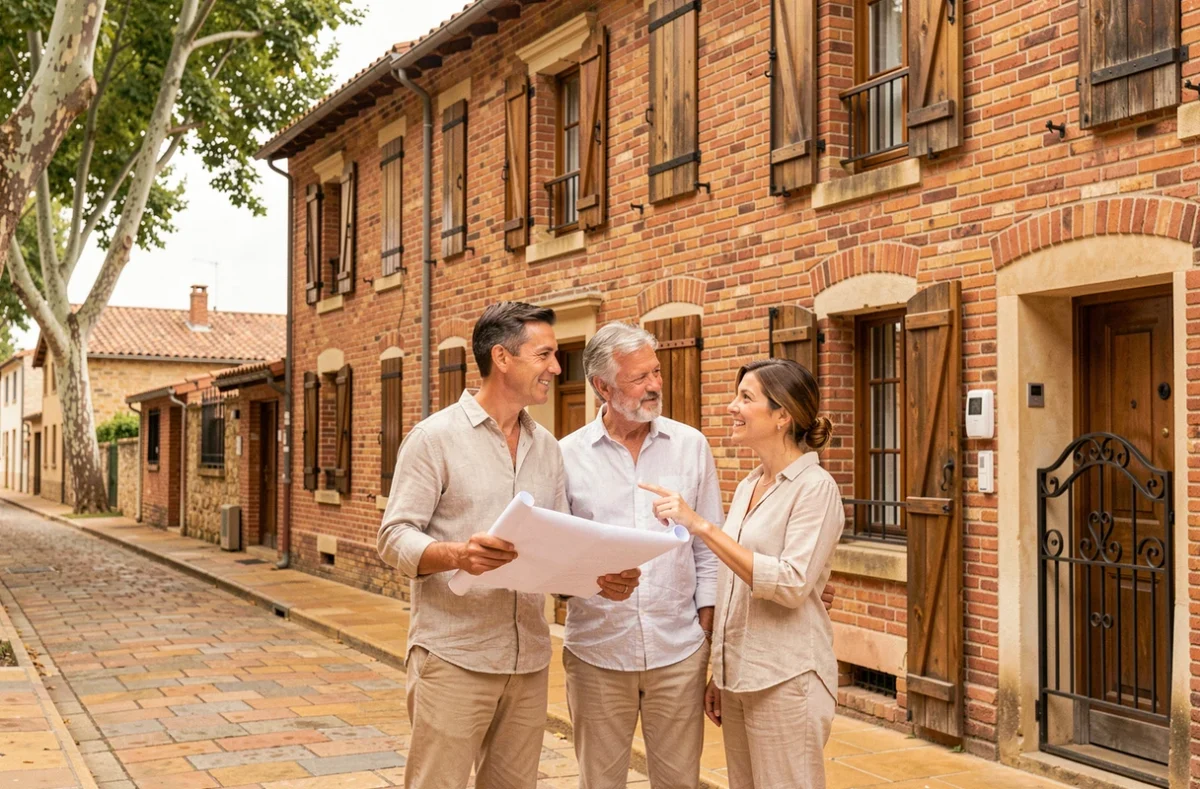
The real estate market in Albi and the Tarn has technical characteristics that buyers often underestimate. Between the geotechnical constraints of the clay soils in the department, the regulatory changes in the energy performance diagnosis (DPE), and the uncertainties of new developments, a real estate project in this area requires a thorough understanding of the land before any signing.
Soil shrinkage-swelling in the Tarn: a risk to verify address by address
We observe that most buyers settle for a communal assessment of clay risk. This is a mistake. The risk of shrinkage-swelling of clays varies significantly from one plot to another, even within the same neighborhood in Albi.
For a single-family home, a soil study allows for the precise evaluation of the subsoil and the adaptation of foundations. A visual inspection of existing cracks, the condition of the foundations, and the management of rainwater is a prerequisite for any serious purchase offer.
Ignoring this diagnosis exposes one to costly structural issues in the years following the acquisition. Insurance companies, in the event of a claim related to drought, increasingly scrutinize soil studies conducted (or not) before the sale. We recommend having this study done even before signing the preliminary agreement, not after.
Professionals in the sector, such as those listed on cap-immobilier-81.com, are familiar with exposed areas and can effectively guide searches towards plots less sensitive to this phenomenon.

DPE and electric heating in Albi: what the new calculation changes
The recalculation of the DPE in 2026 potentially changes the energy label of homes heated by electricity. For an investor or a buyer targeting Albi, this is a decisive parameter.
A property classified as F under the old calculation method may switch to E with the new scale, and vice versa. The DPE label directly conditions the ability to rent: thermal sieves classified as G are already prohibited from rental, and the timeline is tightening for class F.
Impact on price negotiation
Before making an offer, we recommend systematically requesting a DPE established according to the new calculation method. A seller presenting an old diagnosis exposes themselves to legitimate renegotiation. For the buyer, this is a concrete negotiation lever, particularly for older properties equipped with electric convectors.
Energy renovation aids
Assistance programs have evolved regarding heating systems. Before establishing a renovation budget or signing a preliminary agreement that includes a renovation clause, it is essential to check the current conditions of energy renovation aids. A renovation budget based on outdated aids skews the entire financial projection of the project.
New program in Albi: anticipating schedule slippages
The new market in the Tarn is not immune to the tensions affecting construction in France. A recent example illustrates the problem: a highly anticipated residence in Albi, initially announced for delivery at the end of 2026, has seen its schedule slip to early 2028, with the construction launch postponed to October 5, 2026.
A delivery delay of more than a year is not exceptional for new programs in the department. The financial consequences are direct:
- Interim financing (interest paid during construction) increases proportionally with the delay, impacting the profitability of the operation
- The expected rent during the delay period is lost, which deteriorates the projected rental yield
- Delay penalty clauses, when they exist in the reservation contract, rarely cover the full financial damage suffered by the buyer
We recommend negotiating precise clauses on delay penalties and budgeting for at least six months of delay in the financing plan. A real estate project in Albi under VEFA requires this safety margin.
Rental investment in the Tarn: targeting the right fundamentals
Albi has nearly 49,700 inhabitants and hosts about 7,700 students. This student population supports a dynamic rental market for small units, with regular turnover and short re-letting times.
The proximity to the Pierre Fabre site in Castres, which employs several thousand people, constitutes an economic pillar whose impact is felt in the residential market of Albi. Rental pressure remains an asset for investors, with marginal vacancy in the most sought-after property types.
Denormandie: an underutilized tax lever
The Denormandie scheme, accessible in the old center of Albi, allows for a tax reduction in exchange for renovation works representing a significant portion of the total cost of the operation. This mechanism remains underutilized compared to traditional tax exemption schemes, even though it precisely meets the profile of the Albi real estate stock: old homes needing energy standard upgrades.
The living environment in the Tarn, with the UNESCO World Heritage-listed Sainte-Cécile Cathedral, also offers prospects for seasonal rentals. Local regulations on this type of rental should be verified before any commitment.
A successful real estate project in Albi relies less on the price per square meter, which is still affordable compared to regional metropolises, than on mastering technical and regulatory risks. Soil study, updated DPE, VEFA clauses, and verification of aids: these four points form the foundation of a solid acquisition in the Tarn.