When you open the fridge on a Sunday evening with three zucchinis, a bit of grated cheese, and some leftover shortcrust pastry, the question isn’t about finding a sophisticated recipe. You’re looking for a dish that works with what you have on hand, without wasting anything and without spending an hour in front of the oven. It’s this pragmatic homemade cooking reflex that guides the ideas and tips gathered here.
Low-energy cooking: adapting your recipes to energy costs
You don’t always think about it when flipping through a recipe, but the cooking method impacts both the bill and the final result. Since the sustained rise in energy prices, choosing between oven, induction, and air fryer changes the game for a daily meal.
A classic potato gratin often requires 45 minutes in a hot oven. By pre-cooking the potatoes in steam or water for about ten minutes, you significantly reduce the oven time. The gratin remains golden, and the melting texture stays intact.
The air fryer, on the other hand, heats up very quickly and cooks in a reduced volume. For an individual clafoutis or a portioned vegetable tart, it competes with the traditional oven. Feedback on this point varies depending on the models, but the time-saving in preheating is real for most devices.
You can also find all the recipes on Conseils Cuisine to compare cooking times based on equipment and adapt each dish to your own setup.
Three reflexes to adopt before turning on the oven
- Group cooking: if the oven is on for one dish, slide in a dessert (a rhubarb clafoutis, for example) at the same time to make the most of the heat.
- Prefer covered dishes on induction rather than uncovered cooking, which disperses heat and lengthens preparation time.
- Cut vegetables into even, not too thick pieces: a zucchini gratin in thin slices cooks in half the time of a gratin in large cubes.
Anti-waste recipes: cooking leftovers without sacrificing taste
The AGEC law has pushed major recipe platforms to develop sections dedicated to cooking leftovers. In practice, this translates to a simple principle: any edible leftover can become the base of a real dish, not just a makeshift assembly.
A bit of leftover roast chicken from Sunday, for example, can be transformed into a savory tart filling with some cheese and mustard. Leftover cooked pasta can be sautéed with a beaten egg and parmesan to create a crispy pancake in just a few minutes.
The “batch” reflex applied to leftovers
Rather than cooking leftovers on a case-by-case basis, you can integrate them into a light batch cooking logic. In practical terms, this means gathering slightly tired vegetables at the beginning of the week, chopping them, and roasting them all at once.
These roasted vegetables then serve as the base for several meals: in a gratin on Monday, as a wrap filling on Tuesday, blended into soup on Wednesday. One oven session feeds three different dinners.
Homemade desserts without specialized equipment: tart, clafoutis, and chocolate
It’s often imagined that a successful homemade dessert requires a stand mixer, silicone molds, and a precision scale. The reality of daily cooking is more straightforward.
A seasonal fruit clafoutis (rhubarb in spring, apples in autumn) is prepared in a mixing bowl with a hand whisk. The batter is a mixture of eggs, flour, milk, and a bit of sugar. No pre-cooking, no water bath. You pour, bake, and wait for it to brown.
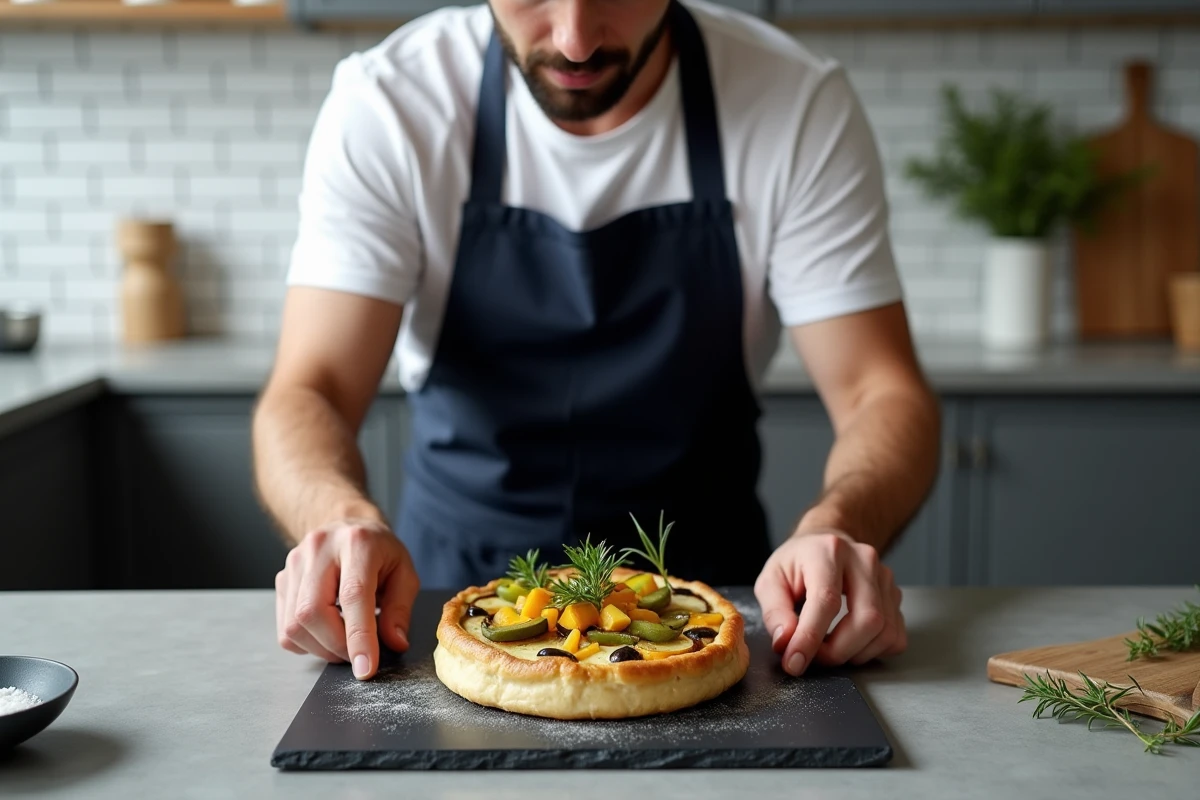
The rustic tart (or free galette) eliminates the mold issue. You roll out the shortcrust pastry on parchment paper, place the fruits in the center, and fold the edges by hand. The result has character and requires no geometric precision.
Melted chocolate: the technique that avoids graininess
Homemade chocolate often fails due to one detail: temperature. Melting chocolate in a water bath while stirring gently, without ever letting the water boil in contact with the container, is enough to achieve a smooth texture.
If using the microwave, proceed in 20-second intervals, stirring between each round. Exceeding the melting temperature results in grainy chocolate that no trick can salvage.

Spring dishes with seasonal products: cheese, vegetables, and quick cooking
Spring opens a short window for certain products. Rhubarb, asparagus, fresh peas, and radishes are only available for a few weeks. Building meals around these ingredients ensures flavor without overdoing the seasonings.
An asparagus and fresh goat cheese tart cooks in less than 30 minutes. The asparagus, simply placed on a base of cream mixed with an egg, retains its crunch if placed raw on the pastry before baking.
Fresh peas, on the other hand, only need a few minutes in the pan with a drizzle of olive oil and a pinch of salt. They are added at the end of cooking to a risotto or an omelet to maintain their color and sweetness.
- Rhubarb: pairs well in both sweet tarts and compotes to accompany white meat.
- Seasonal fresh cheese: spread on puff pastry before adding vegetables, it replaces béchamel and lightens the dish.
- Fresh herbs (chives, mint, basil): to be added off the heat, never during cooking, to preserve their aromas.
Homemade cooking doesn’t complicate with the season; it simplifies. Spring products require less cooking, less sauce, less time. The dish relies on the quality of the ingredient, not on technique.